The Guppy Guide: Tips, Tricks, and Tales
GUPPY HUB
Guppies are small, colorful freshwater fish that are native to northeastern south America, particularly regions around the Caribbean, Venezuela, and parts of Brazil. guppies are among the most popular aquarium fish in the world, largely due to their vibrant colors, small size, and ease of care.
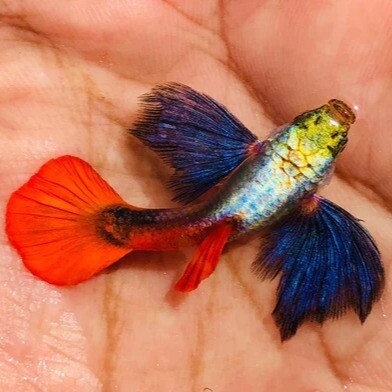
- Size: Adult guppies typically range from 1.5 to 2.5 inches (3.8 to 6.4 cm) in length.
- Color: Guppies are famous for their bright, varied colors. They can come in shades of red, yellow, blue, green, and orange. Males are typically more colorful, with larger and more elaborate tails and fins, while females are usually larger and more subdued in color.
- Body Shape: Guppies have a streamlined body with a small, triangular head, a dorsal fin on top, and a caudal fin (tail) that can be quite large and ornate.
2. Habitat
- Guppies are found in a variety of freshwater environments, such as streams, rivers, ponds, and marshes. They thrive in warm waters, with temperatures typically ranging from 72°F to 82°F (22°C to 28°C).
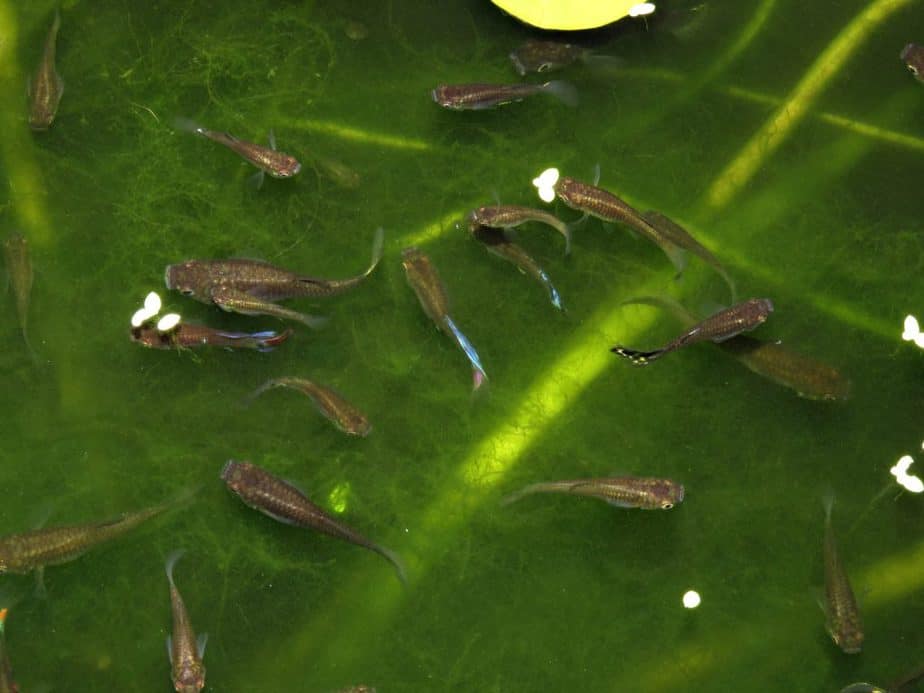
- In the wild, they prefer areas with plenty of plants and hiding spots, although in captivity, they can adapt to a variety of aquarium setups.
3. Behavior
- Social: Guppies are very social fish, and they are best kept in groups. They tend to form small schools or clusters within the tank. Males are often more active and visible in their pursuit of females.
- Active: They are constantly swimming and foraging, making them lively and entertaining to watch in aquariums.
- Peaceful: Guppies are generally peaceful and get along well with other species, especially small and non-aggressive fish. However, males can sometimes become territorial, especially in overcrowded tanks.
4. Diet
- Guppies are omnivores. In the wild, they feed on algae, plant matter, small invertebrates, and detritus. In captivity, they can be fed a variety of foods, including:
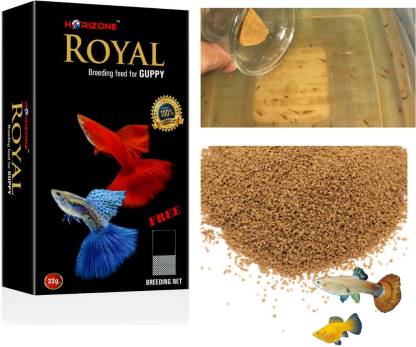
- Flake food
- Frozen or live brine shrimp
- Daphnia (water fleas)
- Small pieces of vegetables (e.g., spinach, zucchini)
- High-quality pellets designed for small aquarium fish
5. Reproduction
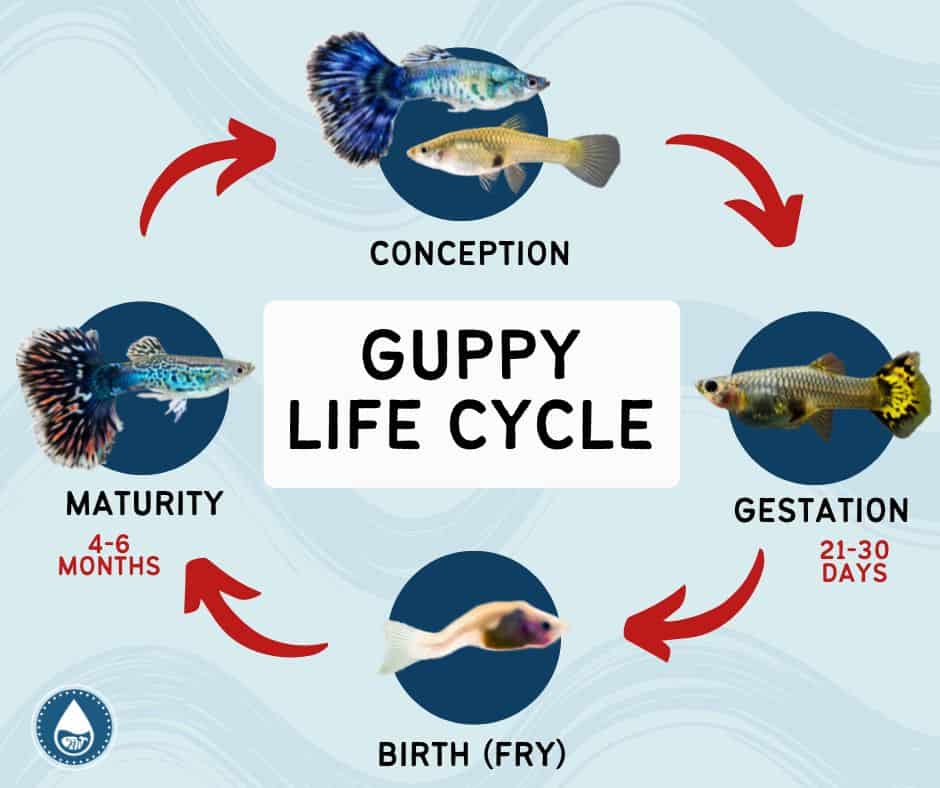
- Guppies are livebearers, meaning they give birth to live young rather than laying eggs.
- They have a very high reproductive rate, with females capable of giving birth to anywhere from 20 to 100 fry (baby fish) in one breeding cycle. A single female can store sperm and produce several broods from a single mating event, often giving birth every 30 days.
- The fry are fully formed at birth and can swim away immediately, although they are often very small and need protection from adult fish.
- Guppy populations can grow rapidly, so it's essential to manage breeding if you don't want to end up with too many fish.
6. Lifespan
- The average lifespan of a guppy is about 2 to 3 years, although they can live slightly longer with proper care.
7. Care Requirements
- Water Quality: Guppies thrive in water that is clean and well-filtered. Regular water changes are important to maintain a healthy environment.
- Temperature: As tropical fish, guppies require warm water, ideally between 72°F and 82°F (22°C and 28°C).
- pH: A slightly alkaline to neutral pH (6.8 to 7.8) is ideal.
- Tank Size: A minimum tank size of 10 to 20 gallons is recommended, but larger tanks are always better to accommodate a school of guppies and reduce stress.
- Decor: Providing plants, rocks, and hiding spots will help mimic their natural habitat, reduce stress, and give them places to rest and hide.
8. Varieties and Breeding
- Over the years, guppies have been selectively bred for their color patterns and fin shapes, leading to a variety of different strains. Some of the most common variations include:
- Endler's Guppy (Poecilia wingei): A smaller, more compact species that has a distinctive pattern of bright colors.

- Fancy Guppies: These are bred for their long, flowing tails and vibrant colors, and they come in a wide range of patterns (e.g., spots, stripes, and mosaics).
- Crown Tail and Lyretail Guppies: These strains are prized for their unique, ornate tail shapes.
9. Benefits of Keeping Guppies
- Low Maintenance: Guppies are generally easy to care for, making them a good choice for beginners.
- Colorful Display: Their bright and varied colors add a beautiful touch to any aquarium.
- Active and Interesting: Guppies are engaging and fun to watch as they interact and swim around in the tank.
- Breeding Opportunities: For those interested in breeding fish, guppies are among the easiest species to breed and observe the process.
COMMON TYPE OF GUPPY
1. Endler's Guppy (Poecilia wingei)
- Description: Smaller than standard guppies, they are known for their bright, bold colors, typically with metallic sheen. They often have orange, green, and black patterns.
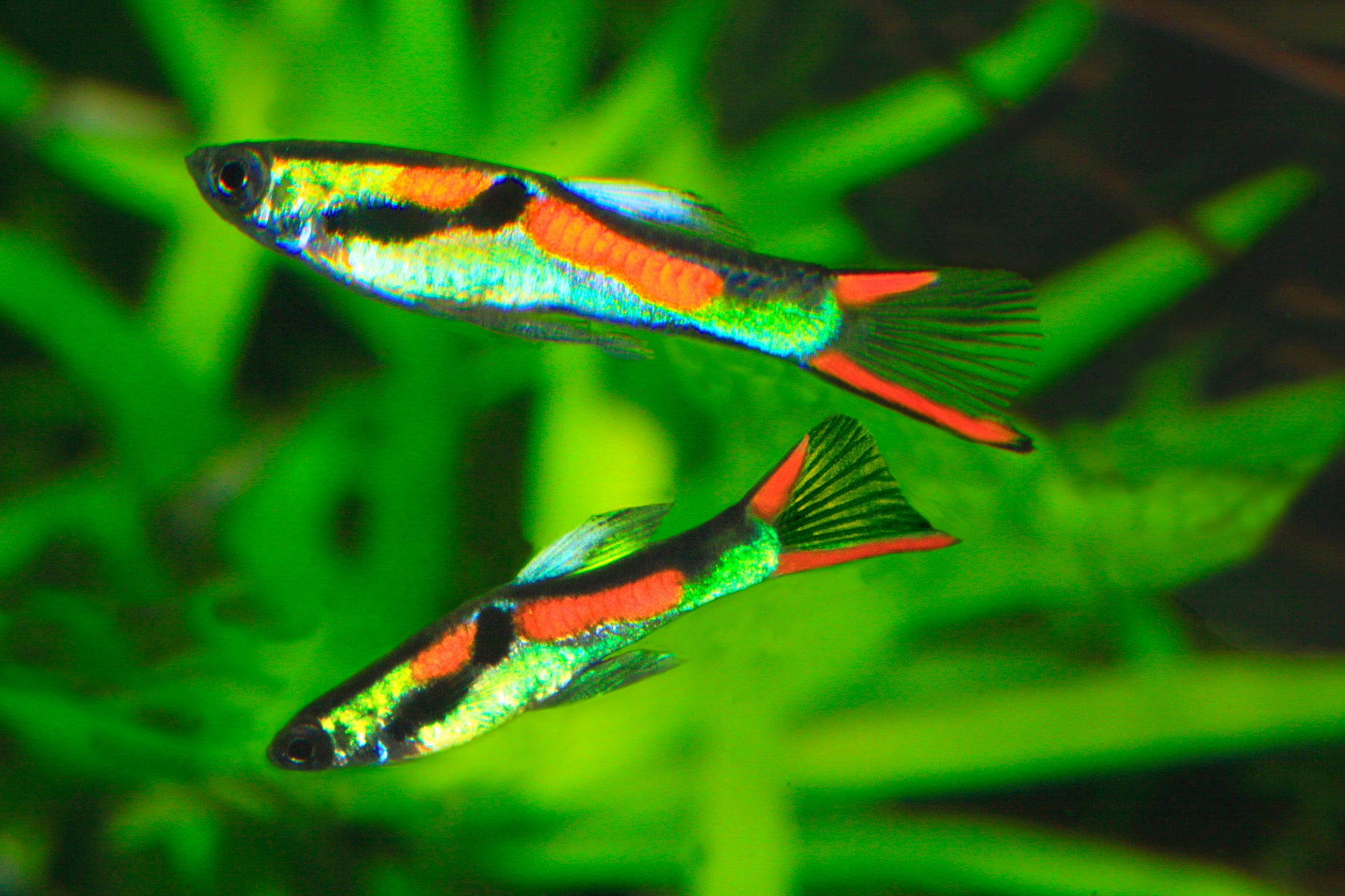
- Characteristics: Smaller size, vibrant coloration, and more active. They are often bred with standard guppies to create hybrid varieties.
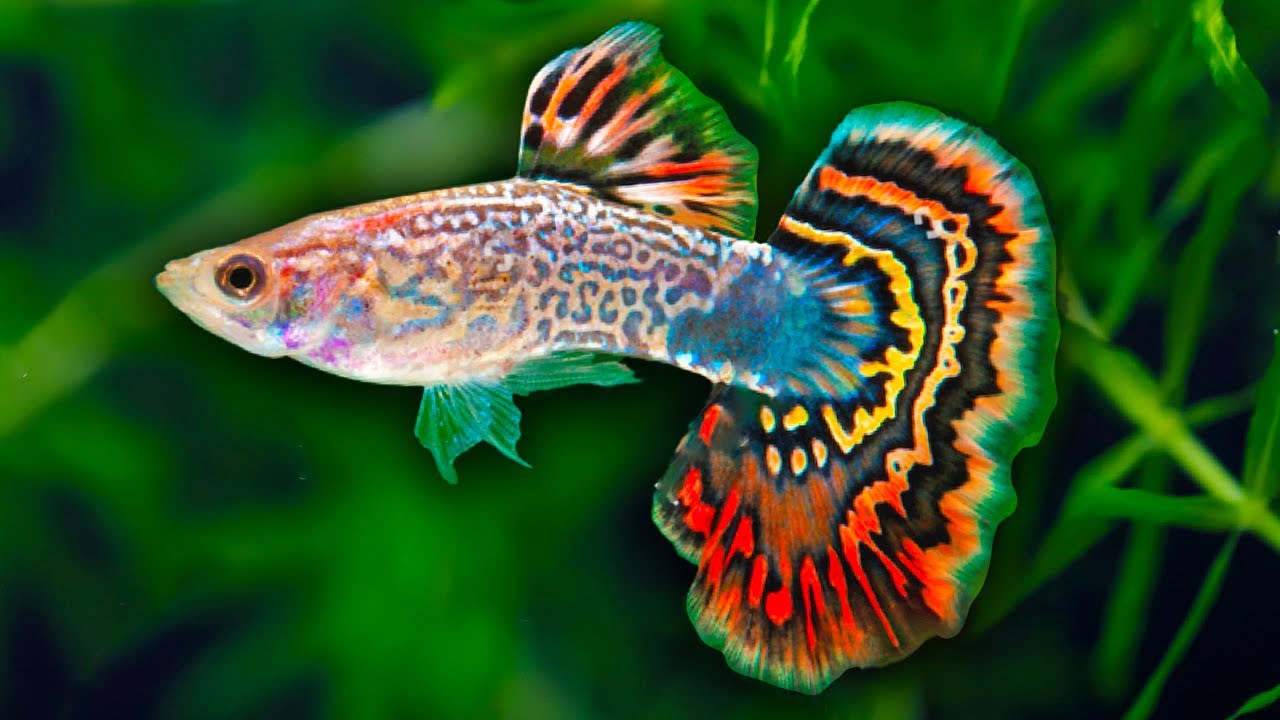 2. Fancy Guppies
- Description: These are selectively bred for their unique color patterns, tails, and fins. They often have large, elaborate tails with various colors and designs.
- Types:Lyretail Guppy: Known for the forked tail resembling a lyre.
- Mosaic Guppy: Features a complex pattern on the tail that resembles a mosaic.
- Delta Tail Guppy: Has a triangular tail that looks like the Greek letter delta (Δ).
- Fan Tail Guppy: The tail flares out like a fan, typically round or broad.
- Double Swordtail Guppy: These have two extended tail fins resembling swords.
3. Wild-Type Guppies
- Description: These guppies are more natural and resemble the wild versions of the species found in rivers and streams. They tend to have more muted colors, usually a mix of green, brown, or grey.
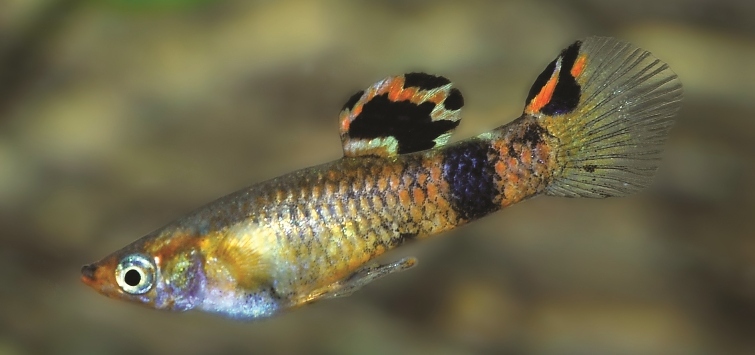
- Characteristics: Less vivid than fancy varieties but are more resilient and hardy.
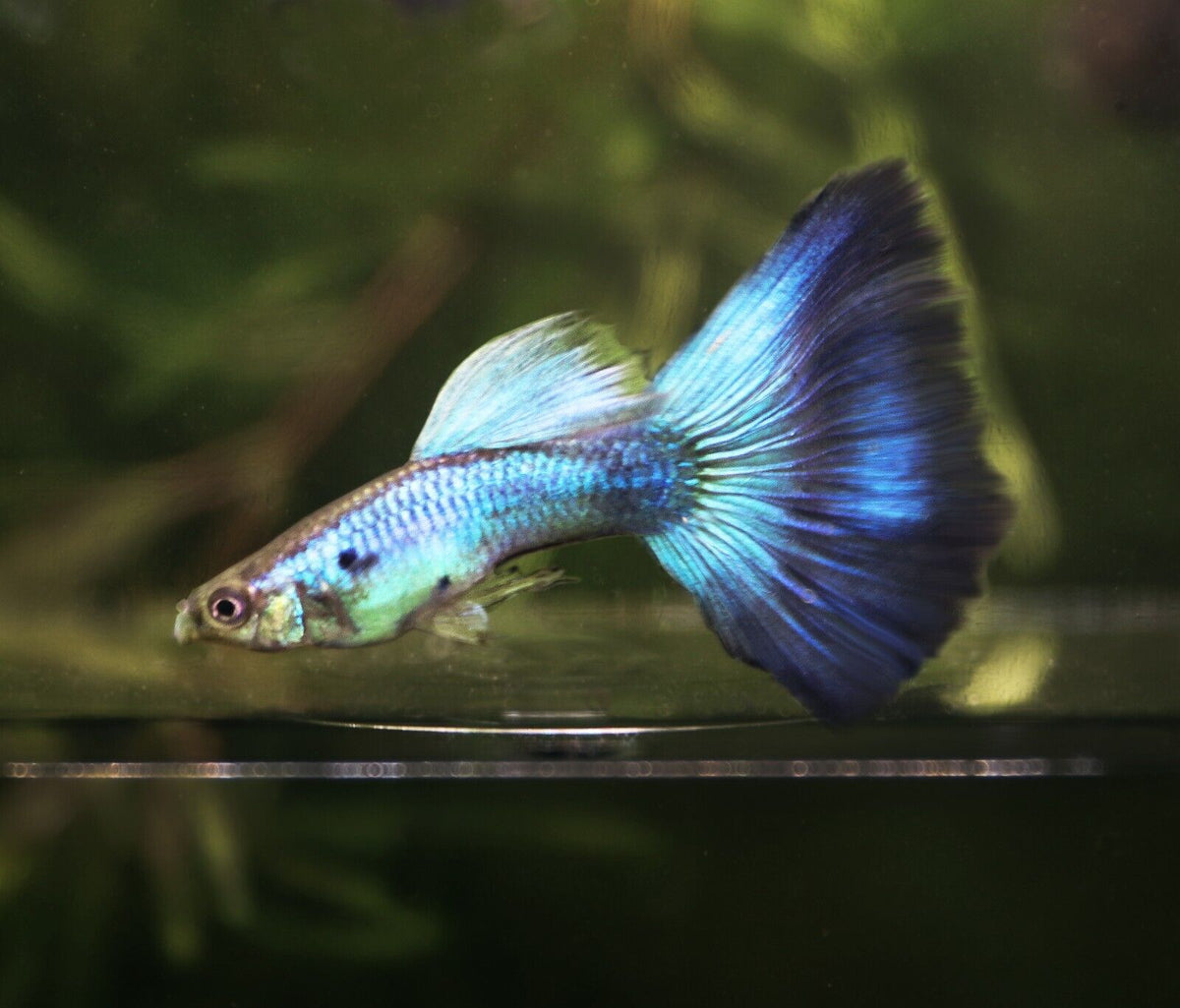 4. Metallic Guppies
- Description: Metallic guppies have a shiny, almost metallic sheen to their scales, often in colors like gold, silver, or copper.
- Characteristics: The scales reflect light, creating a striking and eye-catching appearance.
5. Black Guppies
- Description: Black guppies are characterized by their deep, dark coloration, often appearing black or dark gray with some iridescence.

- Characteristics: Known for their bold, dark color, which contrasts well with lighter-colored guppies.
6. Tuxedo Guppies
- Description: Tuxedo guppies are named for their distinctive coloration that resembles a tuxedo suit — a dark body with lighter-colored tails or fins.

- Characteristics: Their dark body coloration, combined with bright, often contrasting-colored tails, makes them look like they are dressed in formal attire.
7. Dragon Guppies
- Description: Dragon guppies are known for their vibrant colors and large, elaborate tails that resemble the scales of a dragon. They often have metallic or iridescent hues.
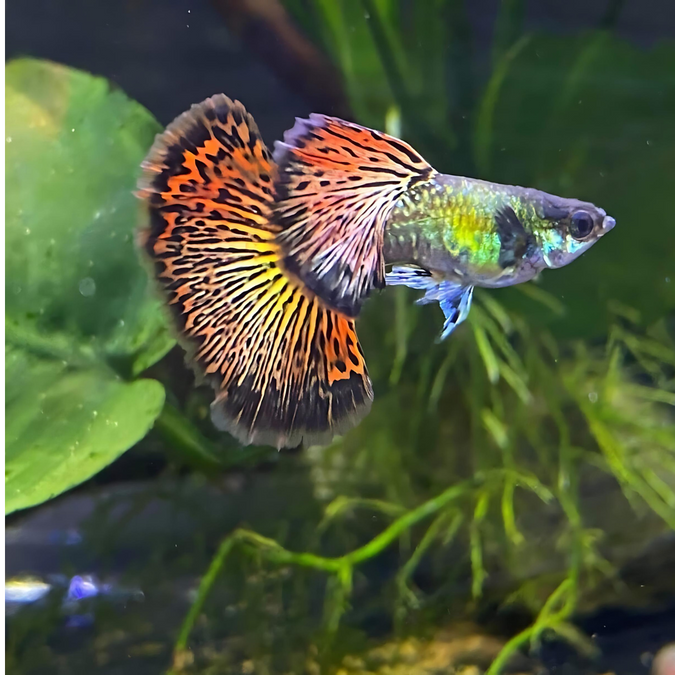
- Characteristics: Their bright, shimmering tails are one of the most attractive features
8. Snake Skin Guppies
- Description: These guppies have a distinct scale pattern that looks like snake skin, with a striking, often metallic coloration.

- Characteristics: Their skin pattern is unique, making them one of the more visually interesting varieties.
9. Pinoy Guppies
- Description: Pinoy guppies are selectively bred guppies from the Philippines, and they are known for their larger size and excellent coloration, especially in males.

- Characteristics: They exhibit a wide range of colors and are prized for their beauty and vibrant patterns.

10. Red Guppies
- Description: Red guppies are distinguished by their bright red coloration, often covering their entire body and fins.
- Characteristics: These guppies can have pure red or various gradients of red hues, sometimes with accents of black or gold.

In conclusion, guppies are not only a delightful addition to any aquarium but also a fantastic choice for both beginners and seasoned aquarium enthusiasts alike. Their vibrant colors, active personalities, and easy care requirements make them a rewarding fish to keep. With the right tank setup, a balanced diet, and appropriate water conditions, your guppies will thrive and provide endless enjoyment. Whether you choose to keep them as solitary beauties or breed them to create even more stunning varieties, guppies remain a timeless favorite in the world of freshwater aquariums. So, if you're ready to add some charm to your aquatic world, guppies are the perfect choice to start with!

Comments
Post a Comment